Entrades

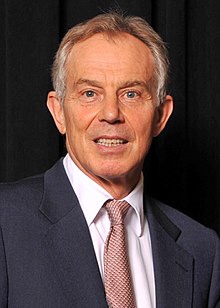
TONY BLAIR & MARGARET THATCHER
Imatge
TONY BLAIR Tony Blair was born on May 6, 1953 in Edinburgh, Scotland. In 1994, he became the youngest leader of the Labour Party. In 1997, he was sworn in as prime minister of the United Kingdom. He stepped down as prime minister and left his position as leader of the Labour Party in 2007. Tony Blair remained active in public affairs, serving as quartet representative to the Middle East and a representative of the United States, United Nations, European Union and Russia to prepare Palestine for statehood. In 2011, Blair was presented with the Liberty Medal by former president Bill Clinton. The following year, the Kaula Lumpur War Crimes Commission held a mock tribunal finding Blair and Bush guilty of crimes against peace and humanity for their 2003 involvement in the Iraq War. MARGARET THATCHER Margaret Hilda Thatcher, Baroness Thatcher, was a British stateswoman who served as Prime Minister of the United Kingdom  from 1979 to 1990 and Leader of the Conservati...

AFTERMATH OF THE WAR. (USA)

Imatge
The aftermath of the civil war (USA). Lincoln’s murder    Abraham Lincoln , the 16thPresident of the United States, was assassinated  by well-known stage actor John Wilkes Booth  on April 14, 1865, while attending the play Our American Cousin at Ford's Theatre in Washington, D.C.  He was shot in the head.     T he assassination was part of a larger conspiracy intended by Booth to revive the Confederate  cause by eliminating the three most important officials of the United States government;  beyond Lincoln's death, the plot failed. Abolition of slavery By the end of the American Revolution, slavery had proven unprofitable in the North and was dying out.  Most Northerners did not doubt that black people were inferior to whites, but they did doubt the benevolence of slavery. The Underground Railroad was organized to help slaves escape north to freedom. The outbreak of the Civil War forever changed the fut...

CHANGES IN THE AMERCIAN INDUSTRY

Imatge
TRANSPORTATION Railroads were of supreme importance to increased trade throughout the United States. By the start of the Civil War, railroads already linked the most important Midwestern cities with the Atlantic coast, fuelling the Midwest's industrial growth. Meanwhile, the great river and lake cities of the Midwest were thriving thanks to the reliable transportation afforded by the steamboat. The Cumberland Road, the first national road, was begun in 1811 and eventually became part of Interstate 40. ELECTRIFICATION The electrical network—would transform the nation even more rapidly than railroads had.  Thomas Edison was the one who really gave light to the American Industrial Revolution. Building on work done primarily by a British inventor, Edison patented the world's first practical incandescent light bulb in 1879. INDUSTRY    Eli Whitney invented the cotton gin, which made the separation of cotton seeds from fiber much faster. ...

Immigration in the American Industrial Revolution

Imatge
The Industrial Revolution led to the need for many workers. Since factories could produce many more products than an individual could produce by hand, we needed people to work  in the factories. Some of these workers came from the rural areas of the United States. Others came from other countries, especially Europeans countries. These people who came to the United States heard there was tremendous economic opportunity in our country. They heard the streets were paved with gold, and there was a lot of opportunity in the United States. Thus, they left the poverty and persecution of Europe to come to the land of opportunity in the United States. There were two major waves of European immigration. The first wave came from  1820-1860 from North and West Europe. People came from Germany, France, Ireland, and Great Britain to name a few countries. Between 1880-1920, another wave of immigrants came from South and East Europe. They came from Italy, Greece, and other Eastern European...

Causes of the civil war

Imatge
Feeling excluded from the political system, they turned to the only alternative they believed was left to them: secession, a political decision that led directly to war.  A common explanation is that the Civil War was fought over the moral issue of slavery. In fact, it was the economics of slavery and political control of that system that was central to the conflict. A key issue was states' rights. The Southern states wanted to assert their authority over the federal government so they could abolish federal laws they didn't support, especially laws interfering with the South's right to keep slaves and take them wherever they wished. Another factor was territorial expansion. The South wished to take slavery into the western territories, while the North was committed to keeping them open to white labor alone. Meanwhile, the newly formed Republican party, whose members were strongly opposed to the westward expansion of slavery into new states, was gaining pro...

Economic style. Laissez faire.

Imatge
One of the guiding principles of capitalism, this doctrine claims that an economic system should be free from government intervention or moderation, and be driven only by the market forces. Centered on the belief (termed invisible hand by the 18th century Scottish economist Adam Smith) that human beings are naturally motivated by self-interest and, when they are not interfered-with in their economic activities, a balanced system of production and exchange based on mutual benefit emerges.

FIRST AND SECOND CONTINENTAL CONGRESS

FIRST CONTINENTAL CONGRESS The First Continental Congress was a meeting of delegates from twelve of the Thirteen Colonies who met from September 5 to October 26, 1774, at Carpenters' Hall in Philadelphia, Pennsylvania , early in the American Revolution . It was called in response to the Intolerable Acts passed by the British Parliament , which the British referred to as the Coercive Acts, with which the British intended to punish Massachusetts for the Boston Tea Party . The Congress met briefly to consider options, including an economic boycott of British trade and drawing up a list of rights and grievances; in the end, they petitioned King George III for redress of those grievances. The Congress also called for another Continental Congress in the event that their petition was unsuccessful in halting enforcement of the Intolerable Acts. Their appeal to the Crown had no effect, and so the Second Continental Congress was convened the following year to organize the defen...